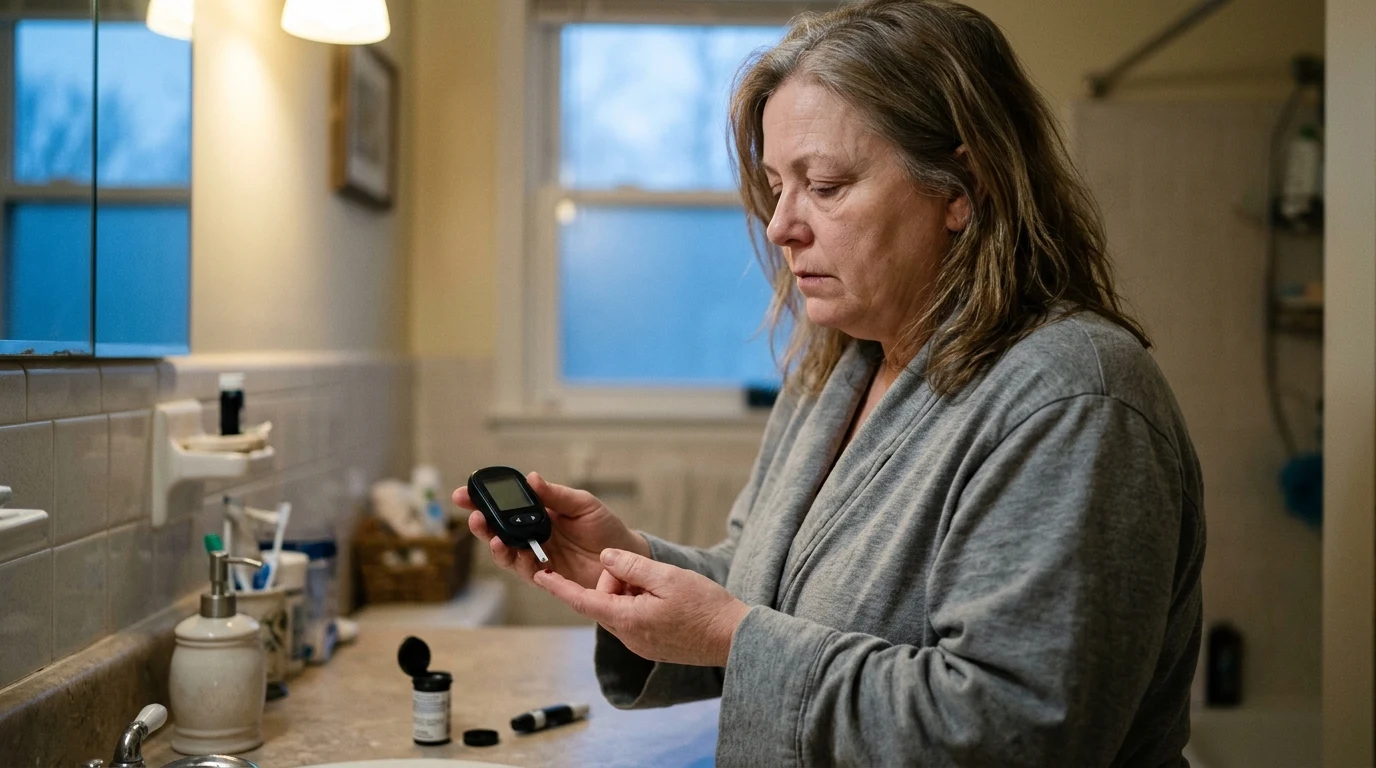

Ray only sat down at the pharmacy blood pressure machine because the line for his prescription was long.
He was 64, retired after thirty years as a mail carrier, and he felt fine. Better than fine. He still mowed his own lawn. So when the screen flashed 148 over 92, he laughed and tried again. 146 over 90.
“That machine's broken,” he told his wife, Carol, in the car. She didn't laugh.
Why “I feel fine” isn't the whole story
High blood pressure usually has no symptoms at all. That's why so many people don't know they have it. According to the CDC, nearly half of U.S. adults have high blood pressure, and only about one in four of them has it under control.
Did you know?
Nearly half of American adults (about 120 million people) have high blood pressure, defined as 130/80 or higher, or taking medicine for it. It is a major risk factor for heart disease and stroke. (CDC)
Ray's doctor confirmed the numbers over two visits. Then she said something Ray didn't expect: before talking about more medication, she wanted him to start moving more, every single day.
The five small changes Ray made
A daily walk, like his old mail route
Ray started with 15 minutes around the neighborhood and built up to 30. The goal his doctor gave him: about 150 minutes a week of moderate activity, the kind where you breathe harder but can still talk.
A home blood pressure monitor
Checking at the same time each morning, sitting quietly first, and writing the numbers down for his next appointment.
Two days of strength work
Simple moves from a chair and with light bands, twice a week. Nothing fancy, nothing heavy.
Less salt, without making a big deal of it
Carol started tasting before salting, and they swapped canned soups for lower-sodium versions.
Getting up every hour
A timer on his phone reminded him to stand up and walk to the mailbox during long TV afternoons.
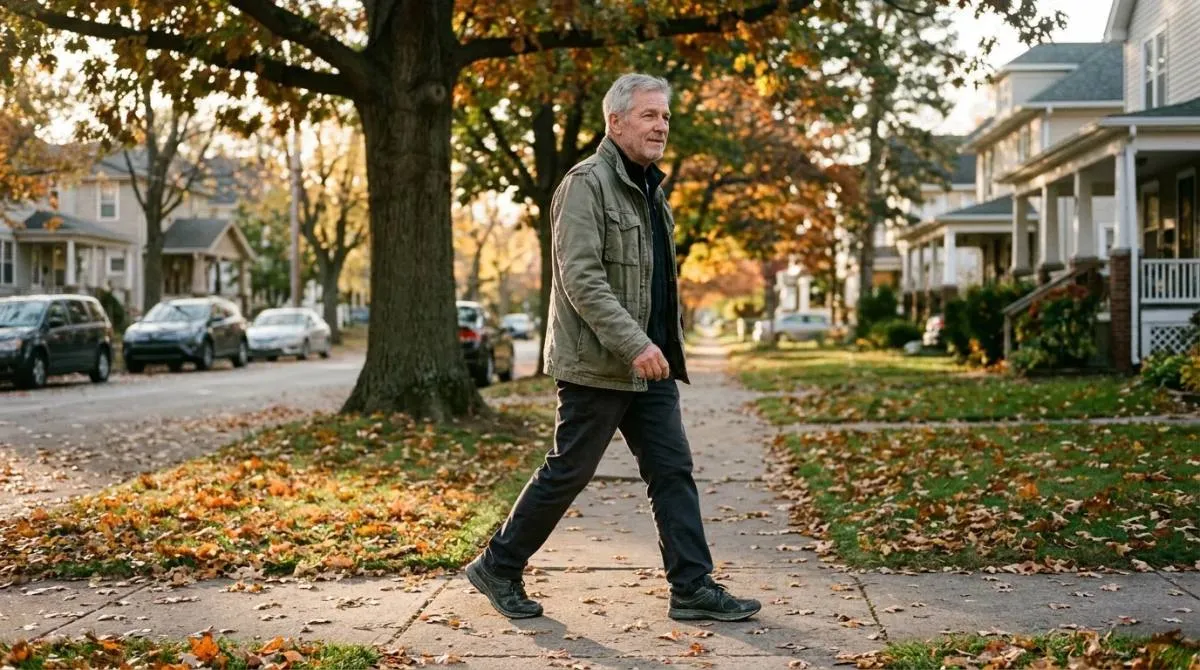
The American Heart Association calls physical activity a first-line treatment for adults with mild to moderately high blood pressure who are otherwise at low risk. Studies show regular aerobic activity can lower blood pressure by several points, and it usually takes one to three months to see the change, which only lasts as long as you keep moving.
“I walked a route for thirty years. I guess I just forgot how good it was for me.”
Ray, three months later
Where to start
If you haven't had your blood pressure checked in a while, start there: a pharmacy machine, a home monitor or your doctor's office. Then talk to your doctor about what kind of activity is right for you. For many people, it starts exactly like Ray's did: shoes on, out the door, fifteen minutes.
Ray is a composite character based on experiences many adults over 50 share. If you feel chest pain, dizziness or unusual shortness of breath during activity, stop and seek medical care.
 The Steady Days program
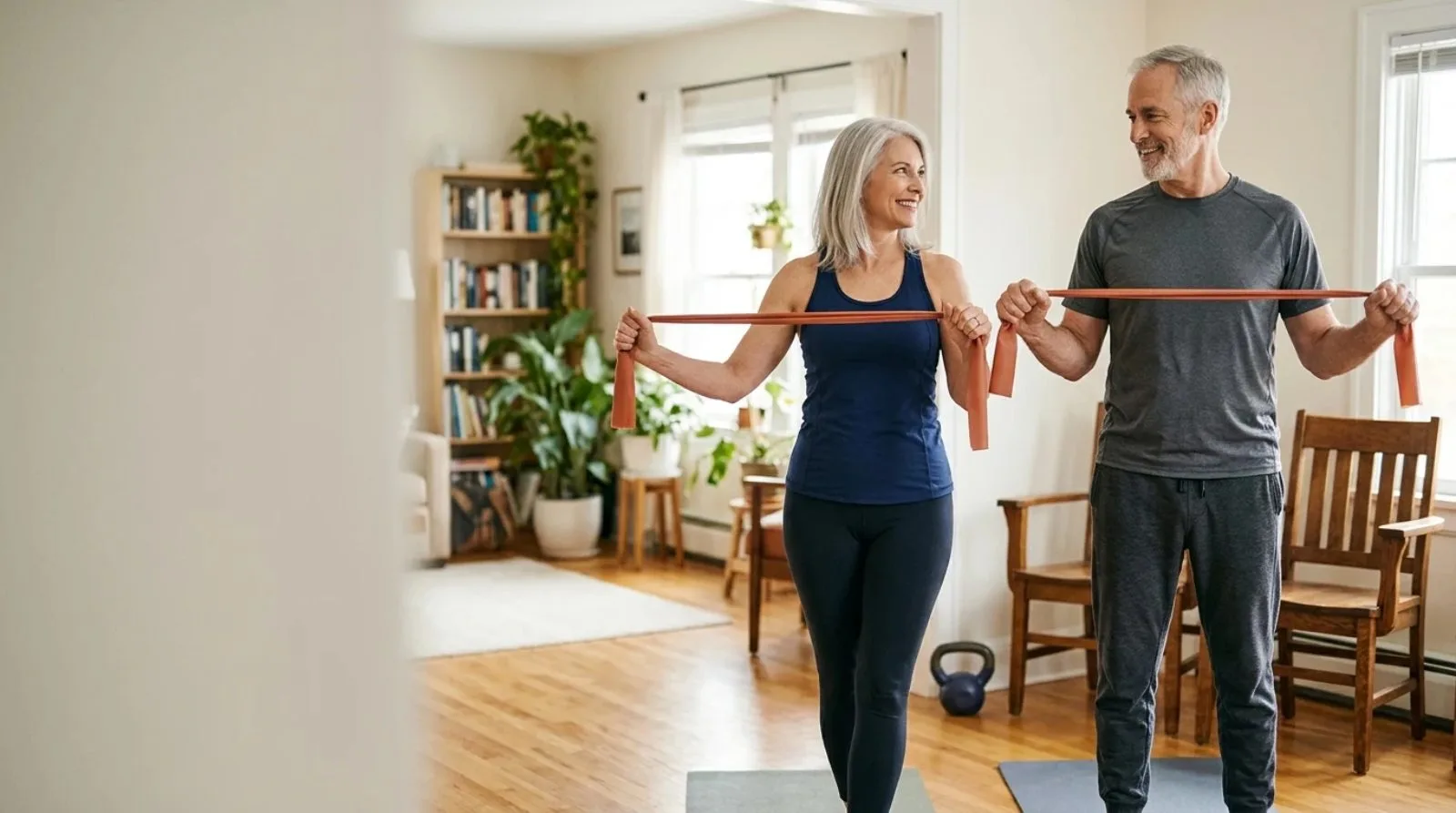
Steady Steps: 21 days to feel stronger after 50
Short, low-impact home workouts with a chair and a band, plus a gentle walking plan. See what can change in 21 days.
See the 21-day plan →
- CDC, High Blood Pressure Facts.
- American Heart Association scientific statement, "Physical Activity as a Critical Component of First-Line Treatment for Elevated Blood Pressure or Cholesterol," Hypertension, 2021.
- Mayo Clinic, "Exercise: A drug-free approach to lowering high blood pressure."
This article is for general information only and is not medical advice. Talk to your doctor before changing your diet, activity or medication.